
Category
Pilot & Aviation
Inspired by cockpit instruments and the golden age of flight, this category celebrates watches with clear aviation lineage. These pieces…
Explore category
Inspired by cockpit instruments and the golden age of flight, this category celebrates watches with clear aviation lineage. These pieces…
Explore category
Built for the sea, these watches take their cues from diving heritage, ocean exploration and life on the water. Expect…
Explore category
Driven by the spirit of racing, this category focuses on chronographs and designs influenced by the track. Bold details, timing…
Explore category
Elegant and understated, these watches are rooted in timeless proportions and traditional watchmaking style. Designed to pair effortlessly with formalwear…
Explore category
Reliable, versatile and easy to live with, these are watches made for daily use without compromise. This category highlights approachable…
Explore category
This category honours watches shaped by military history, service use and duty-led design. Tough, functional and often deeply symbolic, these…
Explore category
clock description
Explore category
Creative, unconventional and visually expressive, this category celebrates watches where design leads the conversation. From bold colour to experimental layouts…
Explore category
Made for travel, exploration and everyday resilience, these watches are built to go further. From field watches to GMTs, this…
Explore category
This is where independent mastery, hand-finished detail and mechanical artistry come to the fore. Focused on exceptional craftsmanship, rarity and…
Explore category
Defined by refinement, exclusivity and elevated finishing, this category explores the more opulent side of watchmaking. From gem-set detail to…
Explore category
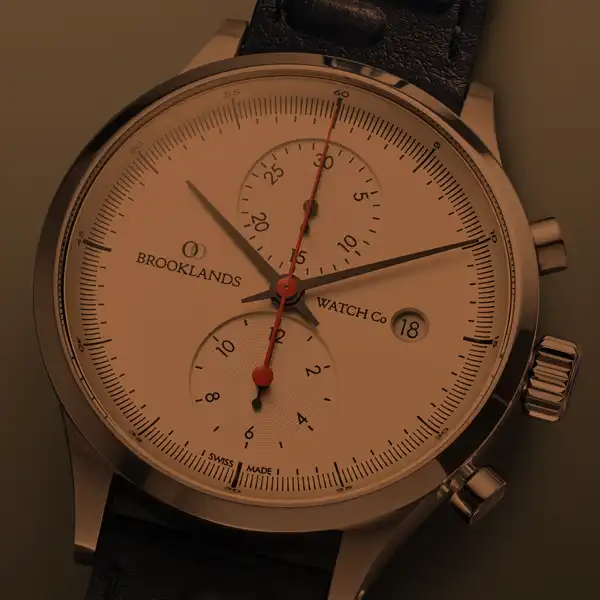


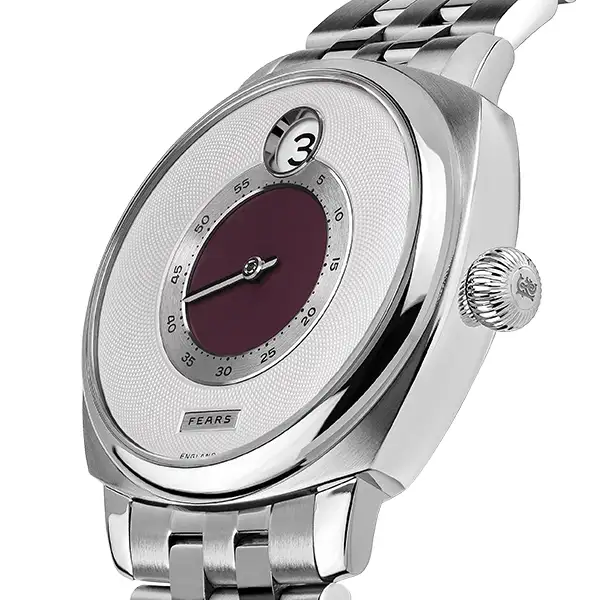

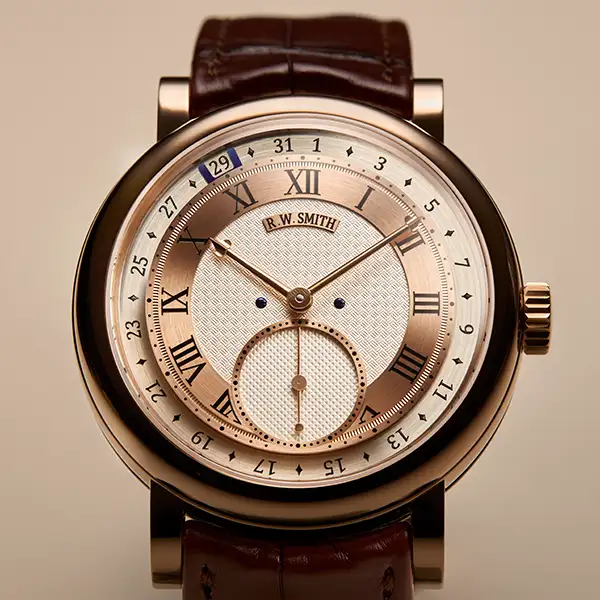






































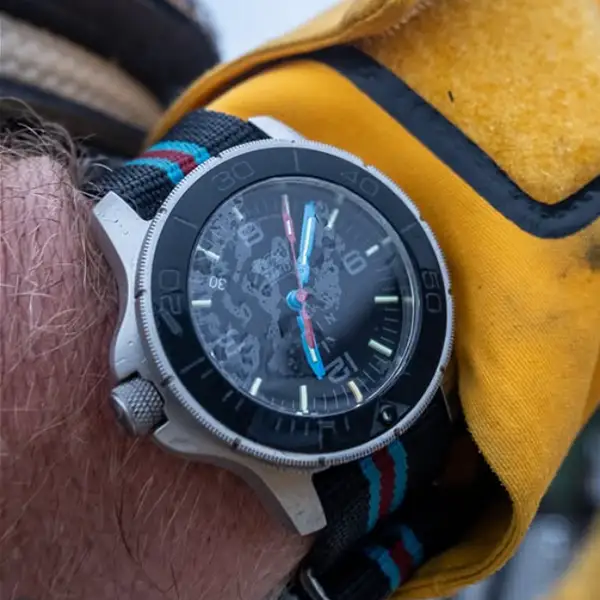


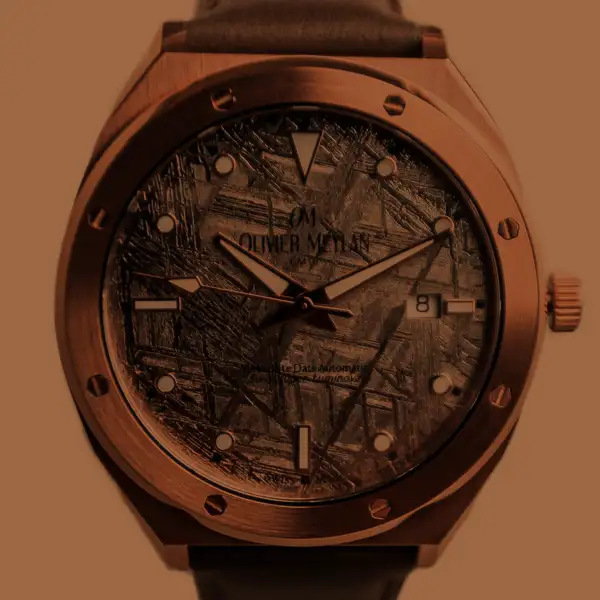

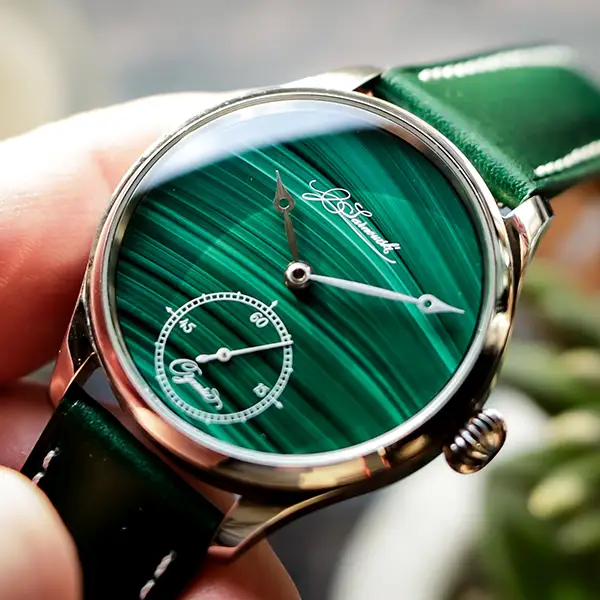

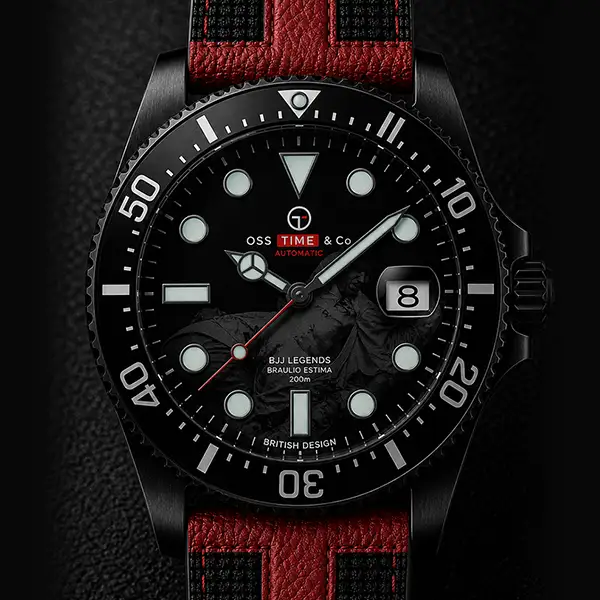











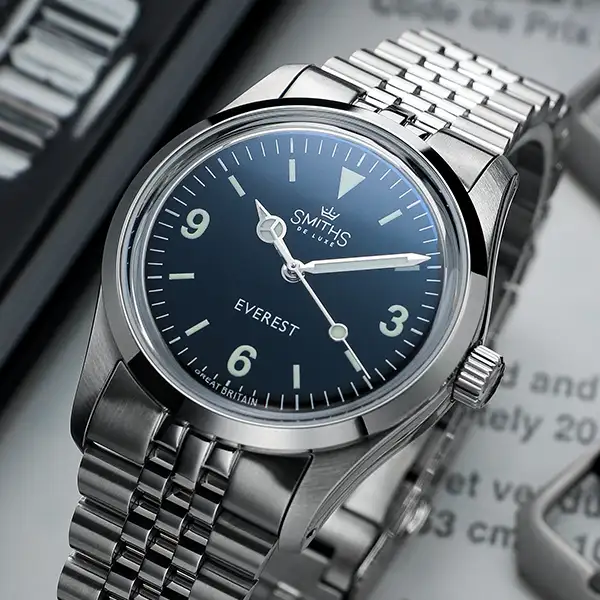






Take to the skies with British watches built for, built from and inspired by the demands of aviation.
Timekeeping has been a vital element of aviation since the Wright brothers flew their landmark flyer exactly 59 seconds. And while cockpit instruments these days are much more accurate than the average mechanical watch, the horological blueprint developed by pilots across the decades is, for want of a better word, timeless.
A clean, legible bezel for quick reading on-the-fly, a rugged, utilitarian build and a look that says, ‘this watch was built for a professional.’ Yes, I’m describing the core tenets of a Pilot watch, but I could just as easily be explaining the kind of watch that British watchmaking is best at. Needless to say, there’s some thematic crossover there.
So, from less-is-more utilitarianism to historical odes to the Battle of Britain, here are the British watches both inspired by and built for the cockpit.

While the idea of Fears producing a Pilot watch might have been an unexpected one, the Filton – named for the historical aeronautical hub near the brand’s hometown of Bristol – shows that good things come from unexpected places. The 40mm stainless steel case is the usual Brunswick fare, cushion-shaped and elegant with a vintage onion crown. The dial on the other hand could have been stripped from a WWII mil-spec cockpit instrument. Big, bold, lumed numerals with bars at 3, 6 and 9, a 12 o’clock triangle in high-contrast black-on-white, it’s the blueprint of a classic pilot’s timepiece, just with Fears’ typical 1930s British flair.

The Air to the Land and Sea of Christopher Ward’s Ministry of Defence trio, the C65 Cranwell leverages the British brand’s signature Light-Catcher case for a Pilots watch with presence. Named after the RAF’s training college, the Cranwell’s dial is a loving homage to the legendary IWC Mk XI, though fortunately with modern specs: Christopher Ward’s superb Bader bracelet, 150m water resistance and a workhorse Sellita SW200, COSC-certified automatic movement. As the watch has been approved by the MoD, the Cranwell has one final flourish with the RAF’s heraldic badge on the caseback.

Gloriously overengineered has become a hallmark of Emsworth-based Zero West and their most recent ode to the legendary Spitfire is no different. The dial could have been stripped out of a cockpit with its avionics-inspired handset and red-tipped seconds hand; the case on the other hand is what happens when you let a couple of guys who are really into engineering loose on a watch. The end result is a balance of modern maximalism and vintage aviation clarity wrapped in a blacked-out, high-contrast look. Finished with an engraved technical plan of the Spitfire on the caseback, this is a big, bold, 44mm beast – in the best possible way.

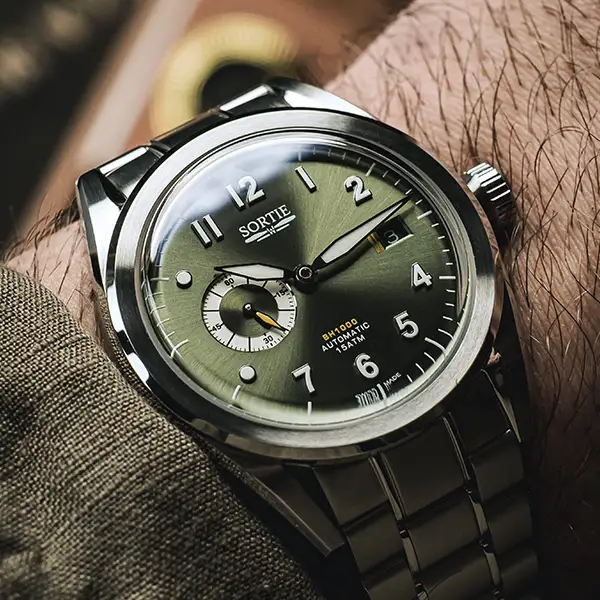
What happens if you mix a practical flight instrument with a dress watch? That’s not a question often asked, but it’s one that’s nevertheless been answered by newcomer Sortie. The sunburst dial of the BH1000 (named after historical airfield Biggin Hill) in blue or green is far more elegant than standard black or white, as are the 40mm cases. Paired with the unusual Sellita SW290-1 and its 9 o’clock small seconds subdial, this is a Pilot watch that stands out for not following the usual blueprint. If you do want something a little more mission-appropriate, there is a stealthy blacked out version, but it’s hard not to love the blue – especially on the complementary sailcloth strap.

Aera’s less-is-more approach to tool watches seems conceptualised to make a great Pilot watch, so it’s about time they’ve finally bitten the proverbial bullet. The P-1 Moon – alongside the black Pilot and blue Air Force Models – is clean and calm, eschewing the usual eye-catching high-contrast look for grey and white with hints of aqua. Despite the name, it’s less mission to the moon and more a summer-ready everyday wearer, right down to the aqua rubber strap. It’s still built as a proper tool watch – a Sellita automatic movement, 100m water resistance and lumed indexes – it’s just less aesthetically intense.

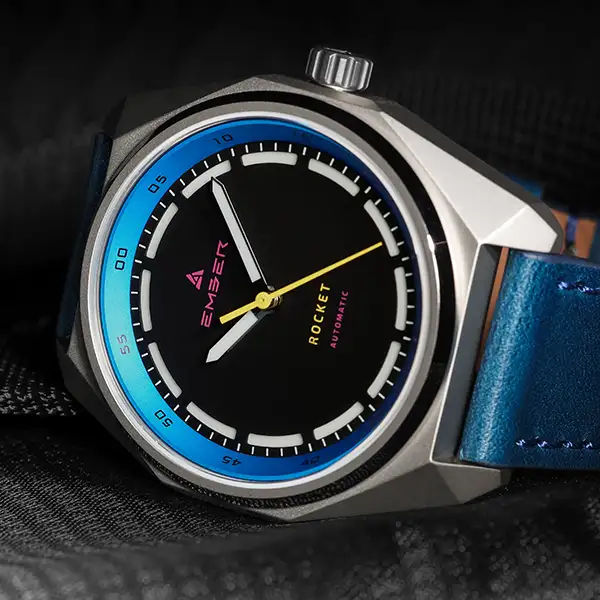
As has become the modus operandi for the ever-colourful Farer, their latest Pilot series isn’t just one design recoloured; it’s three different, distinct versions. The Curtis is the classic military Pilot watch, and the Hewlett offers a cool crosshair dial and high-contrast chapter ring. But it’s the Barnwell that stands out the most. A brown PVD titanium case matched with a brown, segmented Type B dial and light blue minute scale with bright orange hands, it’s a colour scheme that seems to work despite itself. Equipped with an oversized crown to operate the Sellita SW300-1 Elaboré (complete with a 56-hour power reserve), designs like this are what make Farer, Farer.

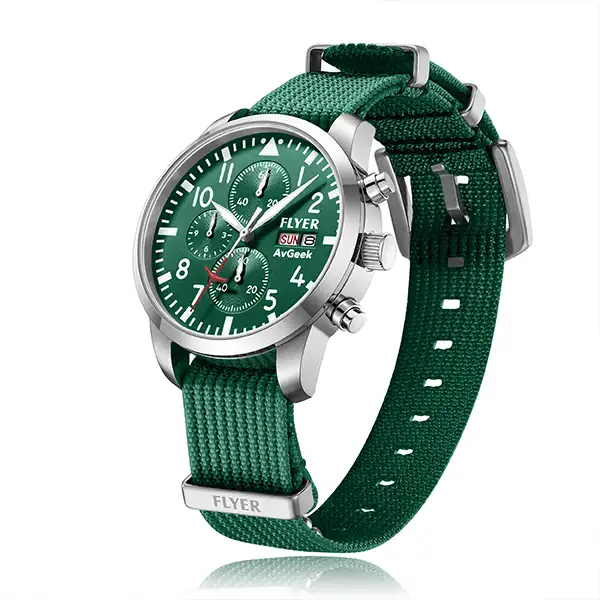
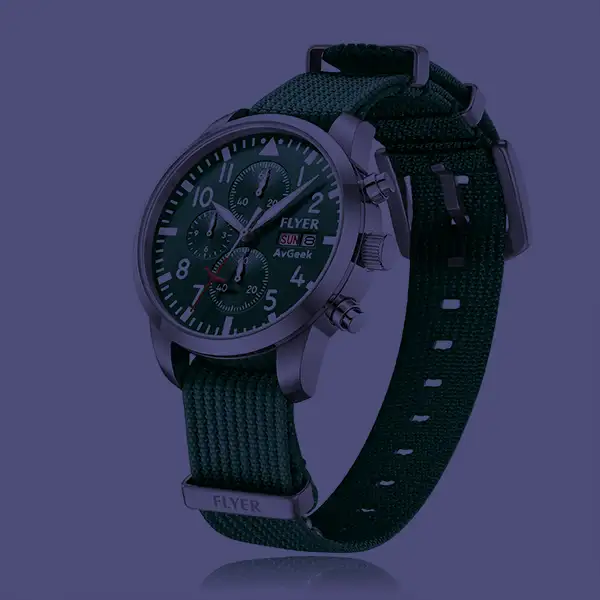
Any automatic Pilot watch for £279 is going to be tempting and even then, the Flyer Watches ZULU packs a lot of value into its price tag. There are a few variations of the ZULU, but the militaristic green paired of dial and strap with the bright silver of the 60-minute bezel is a great-looking, ground crew-appropriate combination. Somehow though, that £279 goes towards more than a Miyota movement and 100m water resistance. Flyer Watches’ profits go towards supporting scholarships and charities in the aviation industry, meaning the words engraved on their casebacks – Helping Dreams Take Flight – genuinely mean something. It’s not just your wallet that’ll feel good about this one.

There are a few watches dedicated to the iconic fighter plane that is the Spitfire, but ‘The Few’ takes a slightly different approach, honouring the pilots as much as the aircraft. Based on the original Battle of Britain watch, the Omega CK2129, it uses the same bezel-locking 4 o’clock crown that you might have seen on Tom Hardy in Dunkirk. Here though the dial, hands and crowns are all made from Spitfire parts – specifically parts taken from aircraft ML295. The metal has been left largely untreated to keep its original, machined look. To round off this thematic tribute, the caseback is engraved with the names of every pilot that flew ML295. This might just be the purest Spitfire tribute ever built.

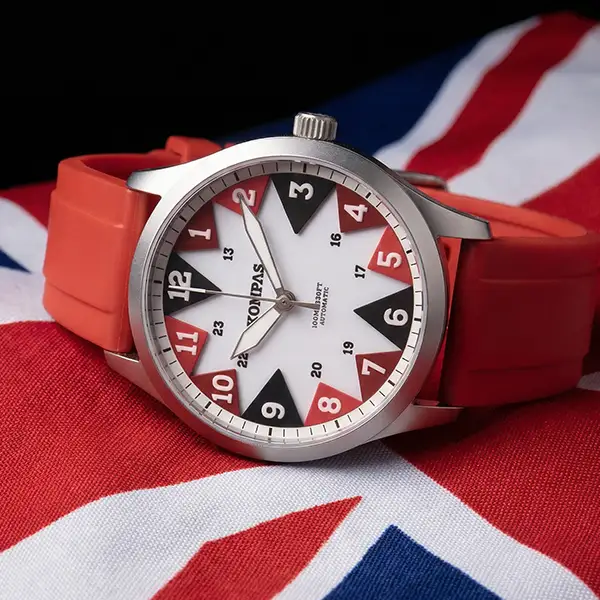
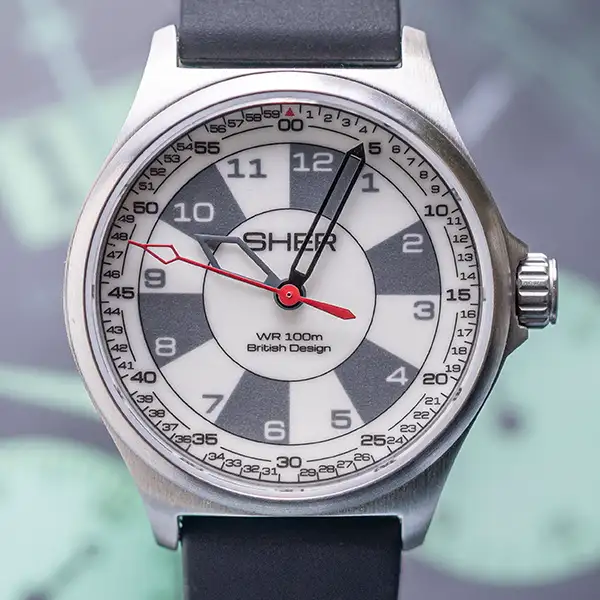
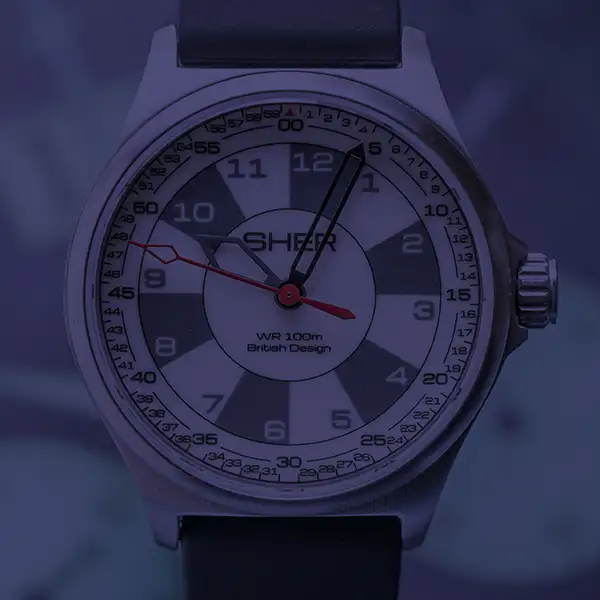
The RAF Sector Clock, introduced in 1917, was a novel way of making cockpit clocks ultra-legible. It’s colour-coded five-minute intervals allowed pilots to track enemy aircraft more efficiently than ever before; by logging sightings according to colour, they created clear time stamps and quicker response times. That clock is the basis for Kompas’ debut watch. While the original Sector Clock was full of colour, the Kompas North offers the same triangular segments but in a more wearable monochrome mix of white, black and grey. Housed in a 39mm case with 100m water resistance and powered by an accessible Miyota movement, it’s a conversation watch that delves into a cool niche of aviation history.

Most GMTs may be more civilian jetsetter than professional pilot, but they’re also one of the most genuinely useful complications in modern watchmaking. Fortunately, Marloe’s SkySplitter offers the best of both worlds. The dial is a classic Type A, complete with 12 o’clock iron sights, clean and ultra-legible. It’s then surrounded by a 24-hour ring in black and teal, read using a plane-shaped GMT hand. Protected by an unnecessary but welcome 200m water resistance and fit with a knurled crown protected by the flowing, 40mm caseband, the SkySplitter is sharp, handsome and a serious amount of mechanical watch for the money.

The accessible British equivalent of the IWC Spitfire chronograph, the Gibson chronograph from Stirling offers that same military aesthetic for less than 1/15th of the price. Not that it’s cheap of course; the 43mm stainless steel case is rock solid and the stealthy, all-black version with red running and chronograph seconds is pure spec-ops cool. The difference is that the movement here is the Miyota 6S20 Quartz. It might not have the prestige of a mechanical chronograph but not only does it make the Gibson much more accessible, it actually makes it more reliably accurate. If you were to actually use this in a cockpit, that’s precisely what you want.

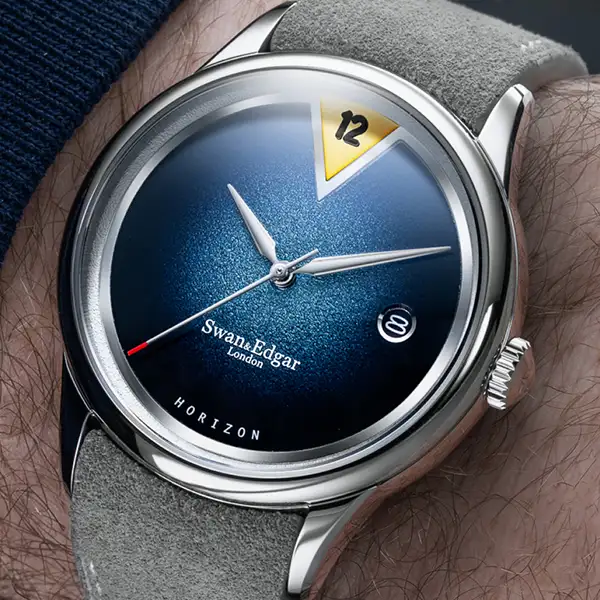
The Horizon isn’t strictly a pilots’ watch; other than the arrow at 12 o’clock – inspired by the RAF Sector Clock – it doesn’t have numerals. Instead, it has a deep blue enamel dial inspired by the waters off the White Cliffs of Dover. The only interruption to the deep fume colouring is the circular, ringed date window at 3 o’clock. Powered by a Miyota 9015 automatic movement and regulated in the UK, this is more like a dress watch with allusions to British military aviation than a true cockpit instrument – but it’s all the better looking for it.

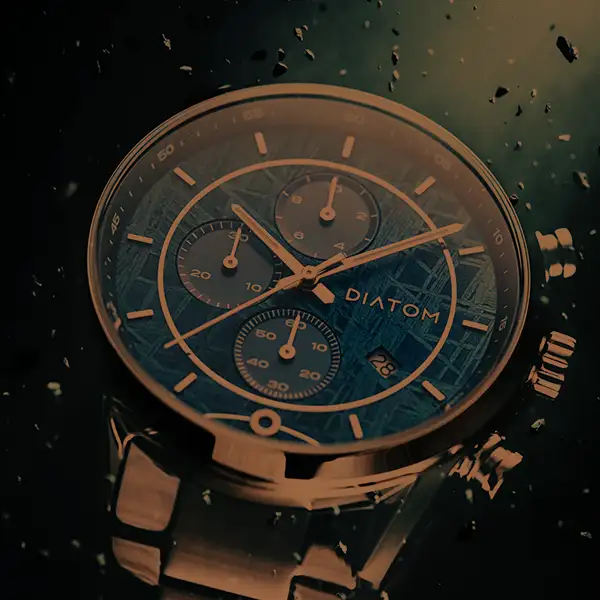
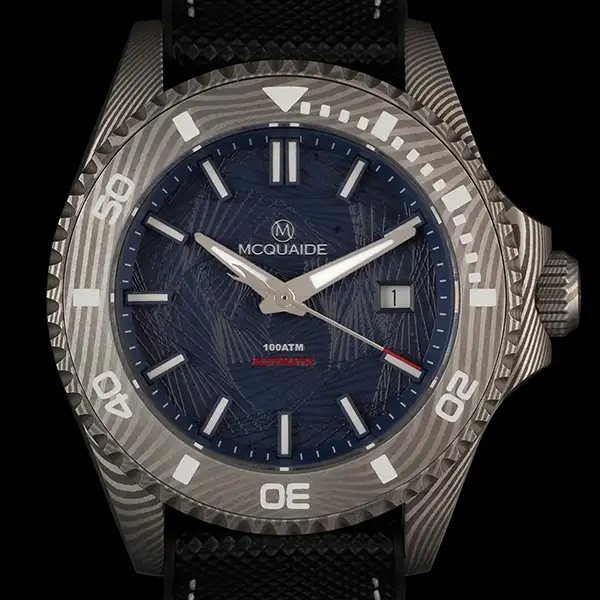
Aesthetically closer to a field watch than a Pilots watch, the Diatom Terra is nevertheless a direct link to aviation. That’s because each of the brand’s watches has been flown 120,000 feet up, higher than all but specialist aircraft can manage – and up to four times higher than commercial flights. Its materials are even more high-flying, with a coloured meteorite dial and a chapter ring made from the Apollo 11 command module. This isn’t a watch built for space flight; it’s a watch built from it. The coloured dials are all lovely, but the blue-green of the Lagoon brings out the Widmanstätten pattern of the meteorite out like few others can.